
High-school interactive courses
Explore trigonometry, motion and waves, alongside deeper chemistry and biology concepts.
Secondary physics formula toolkit · Review middle-school foundations and high-school extensions; each topic identifies its level and conditions.
Course library
13 courses
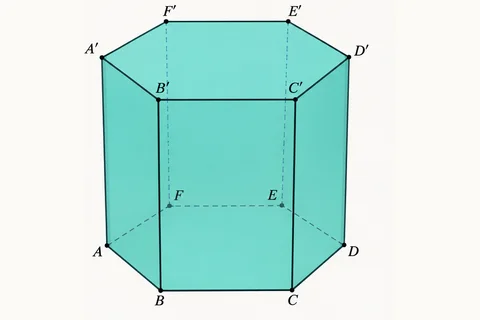
Solid geometry lab
How can we make spatial planes, angles and spheres visible?
Turn, unfold and slice solids, then use projections, vectors, sections, inspheres and circumspheres to verify spatial relationships.
Open the solid geometry lab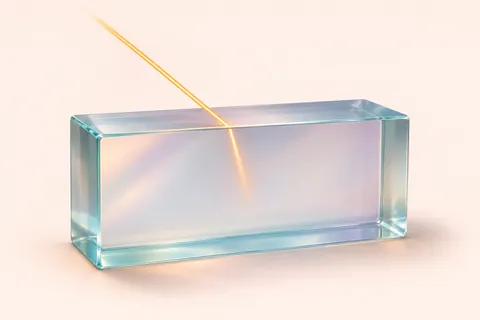
Refraction of light
Why can light change direction when it enters another medium?
Use an interface, normal, angles, and refractive index to predict how light bends, then explore total internal reflection.
Open lesson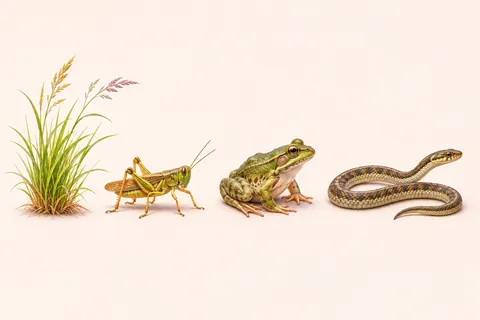
Energy transfer through a food chain
Why is less energy usually available to the next trophic level higher in a food chain?
Adjust producer energy and transfer efficiencies between trophic levels to track how energy decreases step by step.
Open lesson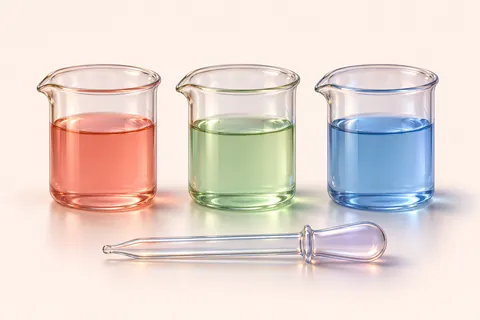
pH, hydrogen concentration, and dilution
Why are pH 3 and pH 4 not merely a little different in acidity?
Use a safe conceptual model to compare pH, hydrogen-ion concentration, and dilution, including the tenfold concentration change represented by one pH unit.
Open lesson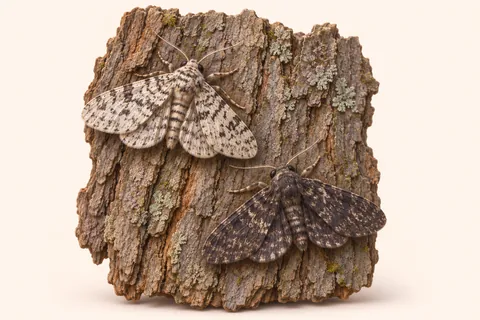
Inherited variation and natural selection
How can an environment change inherited trait proportions without individuals choosing to adapt?
Adjust the initial frequency and relative survival and reproductive success of two inherited variants, then trace deterministic population change across generations in one environment.
Open lesson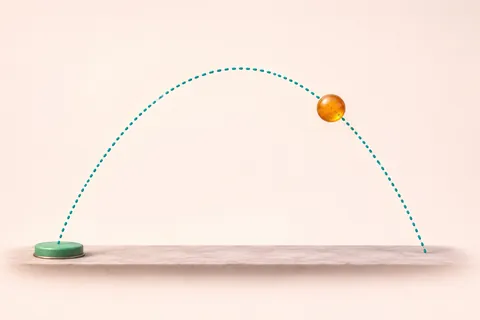
Projectile motion: separate horizontal and vertical
Does extra horizontal speed make a ball with the same vertical launch land later?
Run a vertical throw beside a ball given horizontal speed, then compare height, landing time, and horizontal displacement.
Open lesson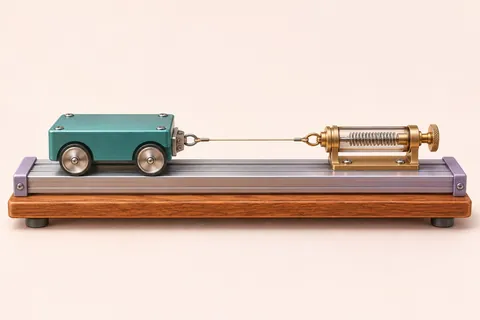
Newton’s laws: predict motion from net force
How do force, mass, and initial velocity each change later motion?
Apply independent leftward and rightward forces to one object, vary mass, initial velocity, and time, and test Fnet = ma.
Open lesson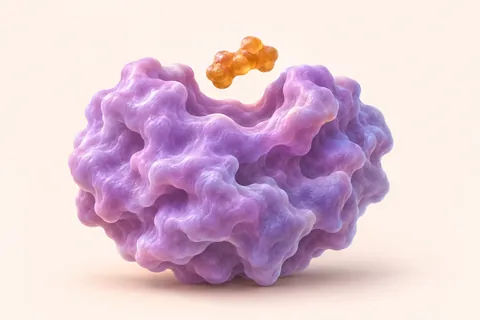
Enzyme activity and reaction conditions
Does adding more substrate always make an enzyme-catalysed reaction faster?
Hold other variables constant and compare how temperature, pH, and substrate concentration jointly affect a model enzyme’s relative reaction rate.
Open lesson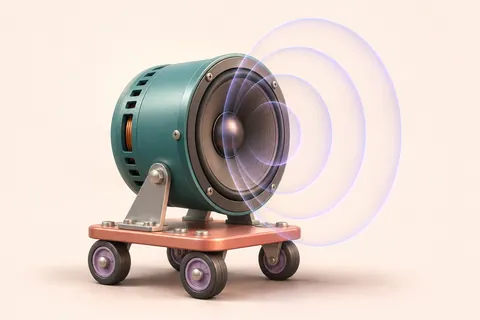
The Doppler effect: trace every wavefront
Why can a moving source crowd wavefronts ahead and spread them behind without changing the speed of sound?
Move a source rightward from Mach 0 to Mach 2, trace circular wavefronts from each emission position, and compare subsonic, sonic, and supersonic geometry.
Open lesson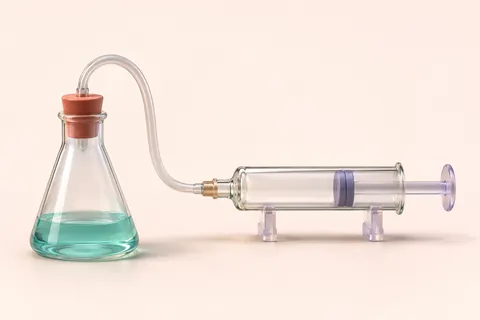
Reaction rates: curves and fair comparisons
Does a faster reaction necessarily produce more product?
Compare how temperature, concentration, contact surface area and a catalyst change an illustrative reaction curve. Separate speed from yield and calculate average rates from a numerical table.
Open lesson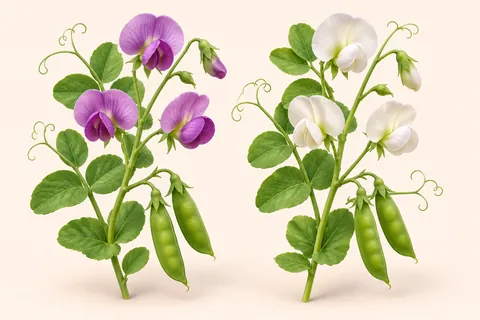
Inheritance squares and probability
If a recessive phenotype has a 25% chance, must every four offspring include one?
Choose the parents’ alleles, calculate probabilities with a Punnett square, and compare random samples of 4, 20, and 100 offspring to see why a small sample need not be exactly 3:1.
Open lesson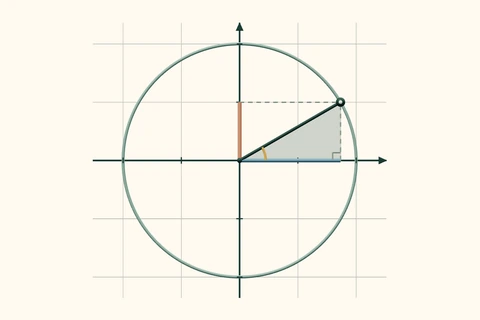
The unit circle: understand sine and cosine
How can the position of one point on a circle tell us sin θ and cos θ?
Rotate a radius of length 1 and compare degrees, radians, and the point’s coordinates. Read cosine horizontally and sine vertically, then use quadrants to explain their signs.
Open lesson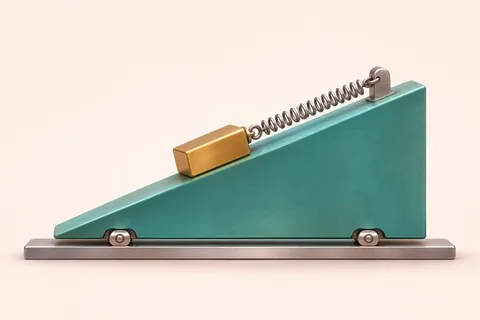
Movable incline: why is the block’s path steeper?
Why does a block on a 30° incline follow a different angle relative to the ground?
Let a spring-loaded wedge slide freely and compare the block’s motion relative to the wedge and ground. Explain the path using horizontal momentum conservation, then inspect energy exchange in simple harmonic motion.
Open lessonNo matching courses. Try another subject or stage, or clear your search.
Predict. Test. Explain.
Every course pairs hands-on exploration with readable explanations. Explore on your own, work with a parent, project it in class, or take the questions to paper.