
Middle-school interactive courses
Grouped by concepts associated with compulsory education; exact school sequence varies.
Start by subject
Course library
15 courses
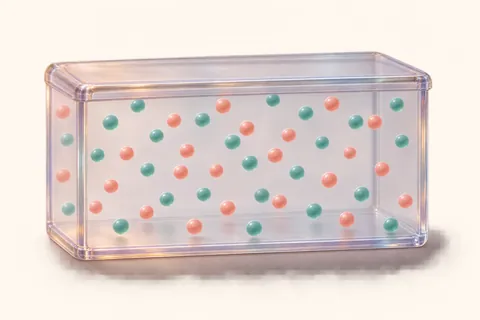
Diffusion and particle motion
Why can a smell or colour spread even when nobody stirs it?
Track how particles spread from a concentrated region toward a more even distribution, distinguishing diffusion from stirring and reaction.
Open lesson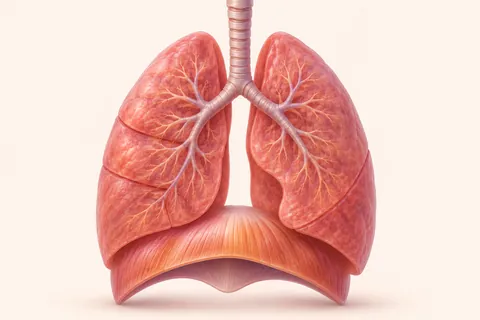
Breathing and circulation
How does inhaled oxygen reach body cells, and how does carbon dioxide leave?
Follow air, alveoli, and blood to explain how ventilation, gas exchange, and circulation work together.
Open lesson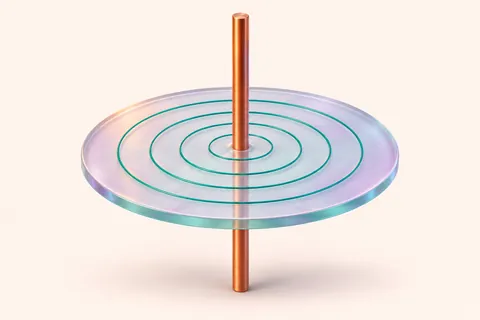
Magnetic field around a current
How does the field around a wire change when its current changes?
Change the direction and magnitude of current in a straight wire, using a compass to test the surrounding field’s direction and relative strength.
Open lesson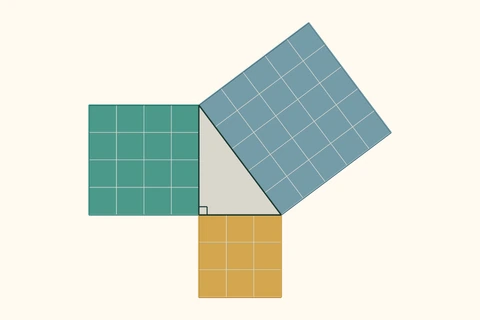
Pythagoras: squares on three sides
Why does the sum of the squares on the legs equal the square on the hypotenuse?
Change the two legs of a right triangle and compare the areas of squares on all three sides to verify a²+b²=c².
Open lesson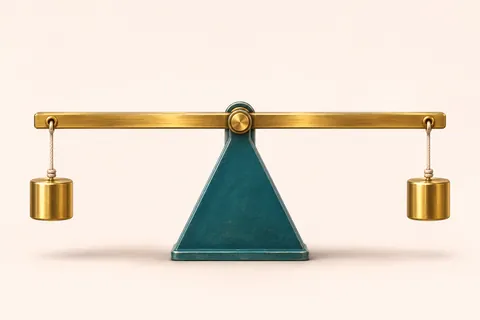
Levers and torque balance
How can a smaller force balance a larger force?
Change force and perpendicular distance from the pivot, then use torque to predict which side wins.
Open lesson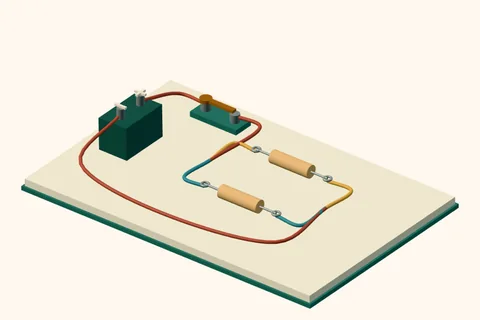
Series, parallel, and a switch
Why does source current change when the same two resistors are connected differently?
Compare voltage, current, and equivalent resistance for two ideal resistors in series, parallel, and an open circuit.
Open lesson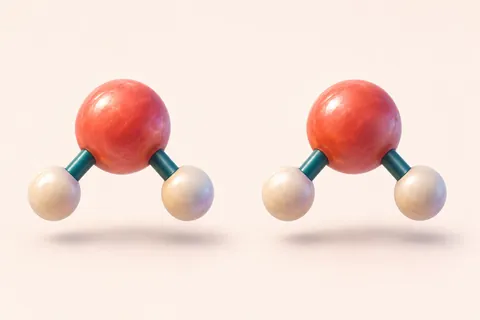
Conserving atoms in chemical equations
When water forms, how can both sides of the arrow contain exactly the same numbers of H and O atoms?
Adjust only coefficients, count each element before and after a reaction, and reduce a balance to its lowest whole-number ratio.
Open lesson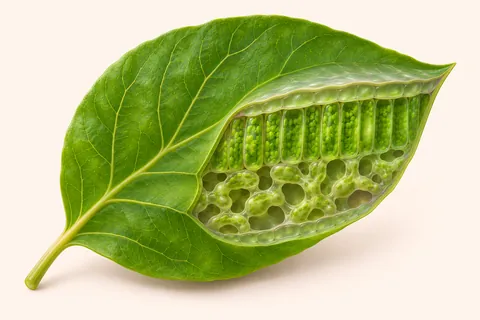
Photosynthesis and limiting factors
If increasing one input no longer raises the rate, which other factor may be limiting the process?
Use a normalized qualitative model to compare relative availability of light, carbon dioxide, and water and identify the limiting input.
Open lesson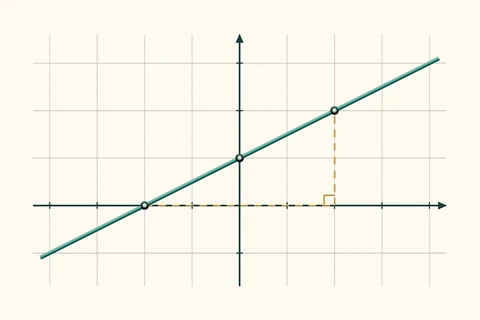
Linear functions and rate of change
How does a line's change per step appear in its equation, table, and graph?
Adjust slope and intercept while the graph, coordinates, and value table update together; see what each parameter controls in y = mx + b.
Open lesson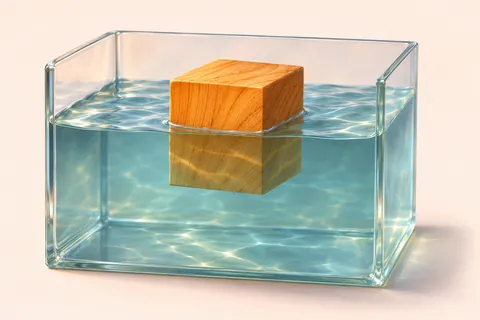
Buoyancy, density, and floating
Why does floating depend mainly on a density ratio rather than weight alone?
Change liquid density, object density, and volume; compare weight with buoyant force and observe displacement when the object floats, is neutrally buoyant, or sinks.
Open lesson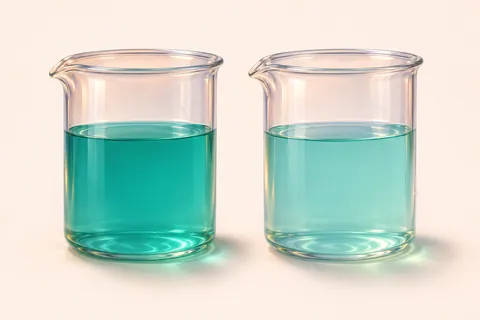
Solution mass fraction and dilution
Why does a solution become less concentrated when only water is added?
Change the masses of solute, water, and added water, then use conserved solute mass to explain dilution.
Open lesson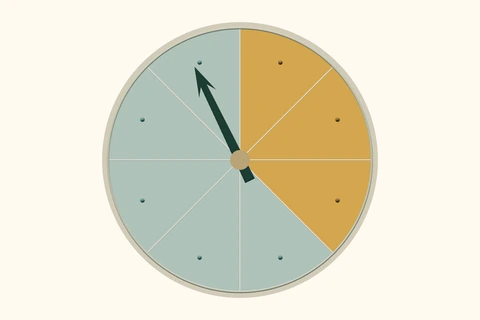
Equally likely events and experimental frequency
Why can experimental frequency fluctuate while theoretical probability stays fixed?
Partition equally likely outcomes into favorable and unfavorable sets, inspect every sampled outcome, and compare theoretical probability with frequency in a finite sample.
Open lesson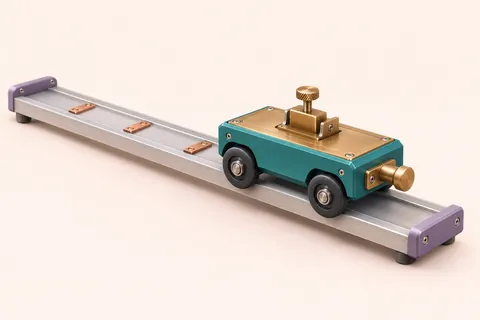
Piecewise motion and distance–time graphs
How does average speed summarize a journey whose speed changes?
Set two constant-speed legs separated by a rest, read slopes and the horizontal section on a distance–time graph, and calculate average speed from total distance and total time.
Open lesson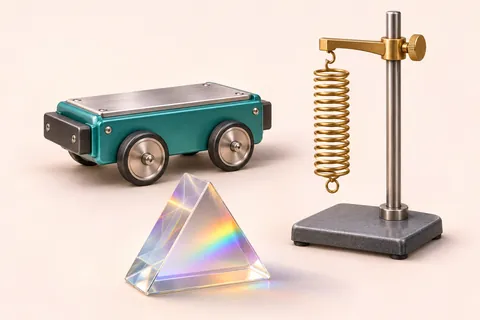
Secondary physics formula toolkit
What should you check after remembering an equation?
Explore ten common equations through force, motion, energy, density and circuit controls. Original diagrams connect units, signs and conditions, with worked examples that catch common errors.
Open lesson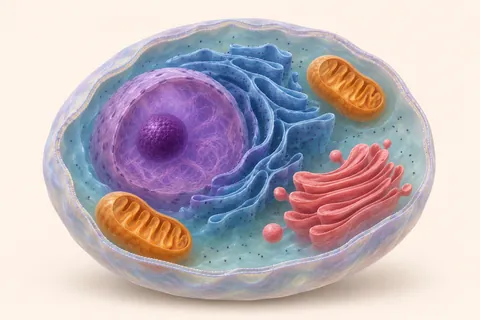
Explore an animal cell
How do structures inside a cell work together to send a protein outside?
Explore seven structures from the whole cell to its organelles, then follow one secreted protein step by step. Plain-language explanations connect each location to its role.
Open lessonNo matching courses. Try another subject or stage, or clear your search.
Predict. Test. Explain.
Every course pairs hands-on exploration with readable explanations. Explore on your own, work with a parent, project it in class, or take the questions to paper.